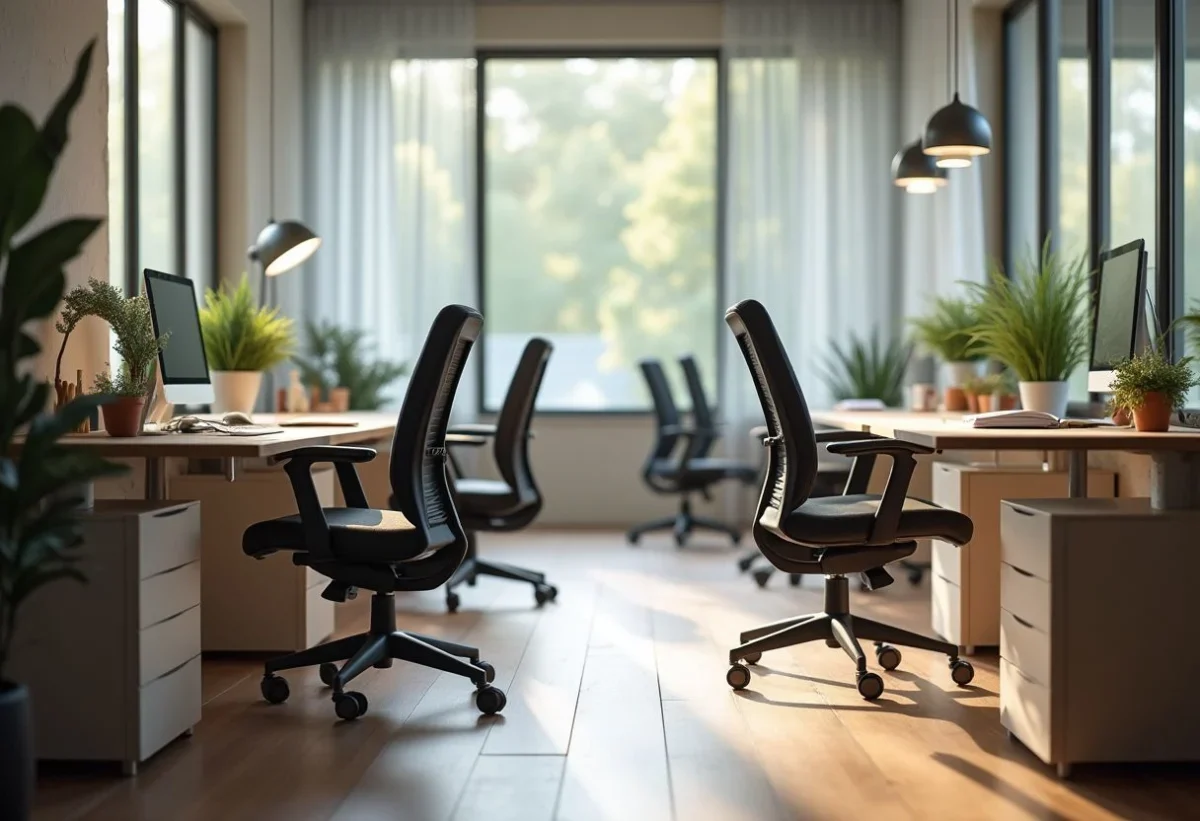
Creating a work environment that combines functionality, comfort, and aesthetics is a real challenge for today’s companies. A well-chosen professional office furniture can transform an ordinary space into an inspiring and productive place.
The principles of ergonomics in the office
Adopting an ergonomic approach in the choice of office furniture means first and foremost thinking about the physical well-being of employees. Physical comfort is directly linked to productivity.
- Ergonomic chairs: they provide adequate lumbar support, thus reducing back pain. Height and tilt adjustments allow for adaptation to each user.
- Height-adjustable desks: allowing employees to alternate between sitting and standing helps prevent muscle pain and increases concentration.
- Screen positioning: ensuring that screens are at eye level reduces eye strain and neck tension.
Design and aesthetics: impact on motivation
Well-designed office furniture is not just functional; it must also be visually appealing. Aesthetics play a significant role in employee motivation and the company’s image.
The colors and materials used influence mood and productivity. Light tones and natural materials like wood create a calming atmosphere, while bright colors can energize the space. A harmonious layout encourages a sense of belonging and pride among employees, thus strengthening their commitment to the company.
Functionality and adaptability
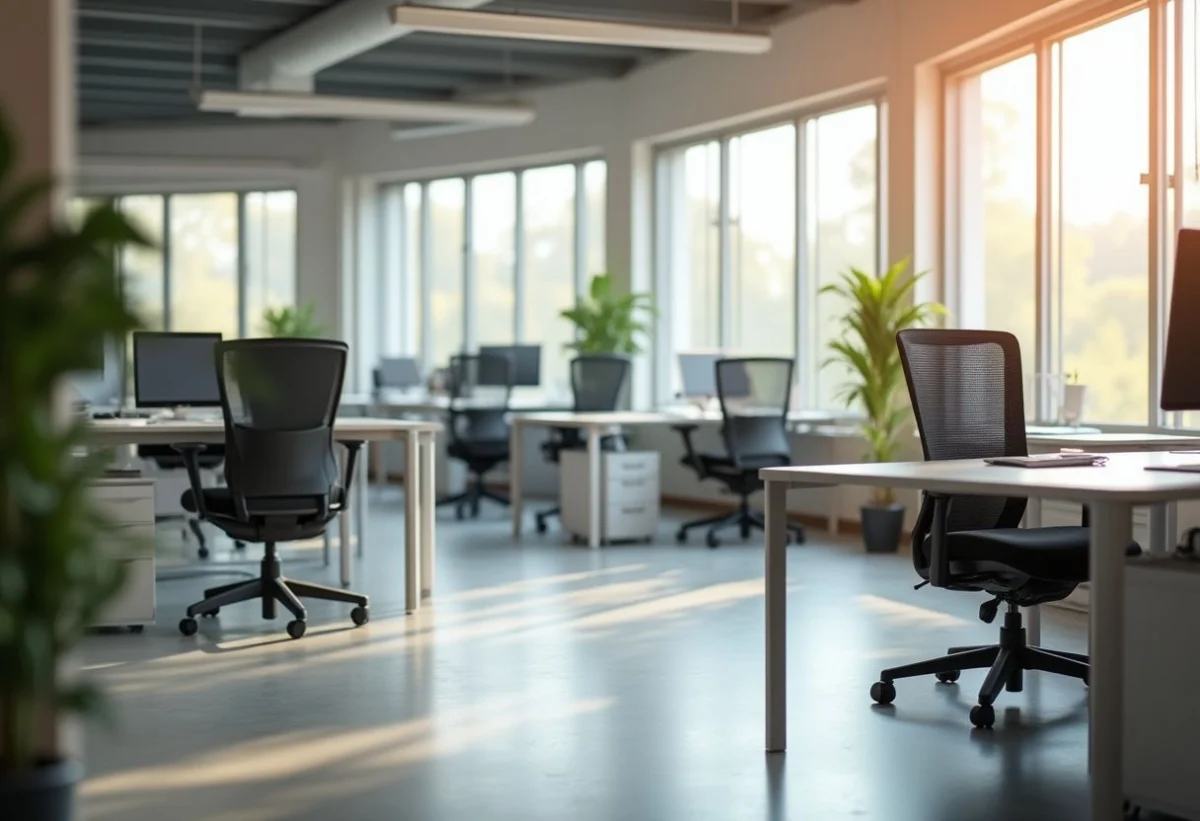
In a constantly evolving work environment, furniture must be as adaptable as the employees who use it. Functionality and adaptability are key elements to meet the diverse needs of workers.
- Modular furniture allows for quick reconfiguration of a workspace for meetings or collaborative projects.
- Integrated storage solutions help maintain an organized environment, which is essential for mental clarity.
- Shared or collaborative workstations encourage the exchange of ideas and creativity.
Current trends in office furniture
Recent trends in office furniture reflect a shift towards more flexible and inspiring spaces. Modern companies seek to integrate innovative design elements that meet the new demands of remote and hybrid work.
Open office configurations, the integration of smart technologies, and the use of eco-friendly materials are becoming increasingly common. These trends reflect a growing awareness of the importance of creating sustainable and nurturing workspaces, in line with the company’s values.
By rethinking your office furniture, you are investing in much more than just furniture. You are improving the quality of life at work, stimulating creativity, and optimizing your team’s efficiency.