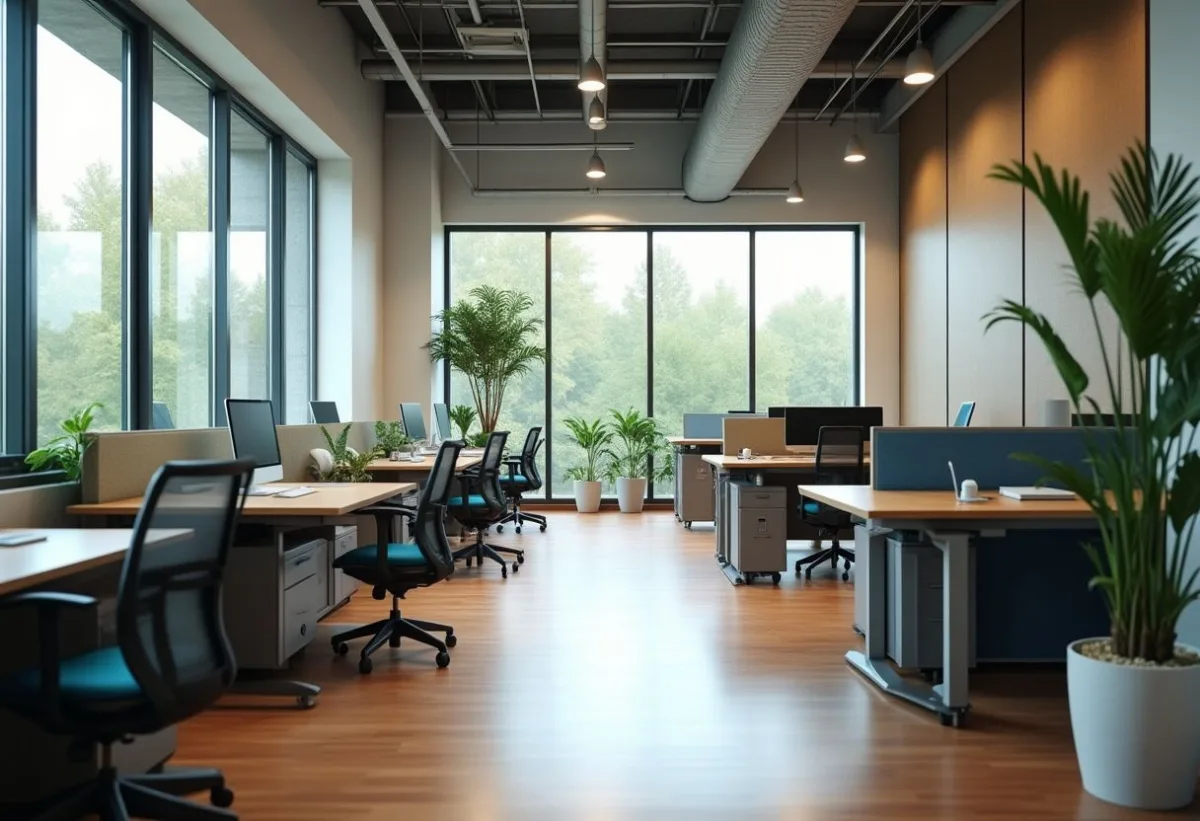
In a professional world where flexibility and efficiency are key, open spaces have made their mark, even in the most constrained work environments. With the cost of square meters constantly rising in major metropolitan areas and the evolution of work modes, it has become essential to rethink the layout of workspaces to maximize productivity while promoting employee well-being. The question arises: how to design an optimal open space in a small area? Ingenious solutions and creative ideas exist to meet this challenge, combining design and functionality to transform these limited spaces into true places of collaboration and exchange.
Ingenious Layout for an Optimized Space
The key to a successful open space in a small area lies in the thoughtful arrangement of furniture and workspaces. A good layout can transform a cramped room into a harmonious and productive workplace.
- Use of modular furniture: modular furniture allows for reconfiguring the space according to current needs. They can be moved or stacked to create various configurations.
- Zone layout: creating distinct areas for different activities, such as collaborative workspaces and quieter corners for concentration, optimizes space usage.
- Use of removable partitions: lightweight and mobile partitions allow for dividing the space without overcrowding, providing some privacy without closing off the area.
Maximizing Light and Acoustic Comfort
A pleasant work environment relies not only on spatial arrangement but also on sensory elements such as light and sound. In a small open space, these factors become even more critical for employee well-being.
Natural light is a valuable ally in workspaces. Using light colors on walls and furniture to reflect light can create an illusion of space. Glass partitions allow light to flow while elegantly delineating areas.
For acoustic comfort, it is essential to choose absorbing materials that reduce ambient noise. Acoustic panels, carpets, and thick curtains are wise choices to absorb sounds and avoid the echo effect.
Integrated Technologies and Digital Solutions
New technologies play a crucial role in optimizing small workspaces. They allow for saving physical space while increasing efficiency and connectivity among teams.
Desks equipped with integrated USB ports and wireless chargers are key elements in a modern open space. These features reduce the need for power strips and bulky cables, thus freeing up desk space.
- Use of digital storage solutions to limit paper use and free up physical space.
- Integration of online collaboration tools that allow teams to work together without being physically close.
- Use of professional office furniture that integrates technology for more functional workspaces.
Promoting Well-Being and Productivity
A successful open space, even in a small area, must necessarily promote the well-being of its occupants to ensure optimal productivity. Improving the daily user experience is essential to transform a restricted space into a pleasant and stimulating work environment.
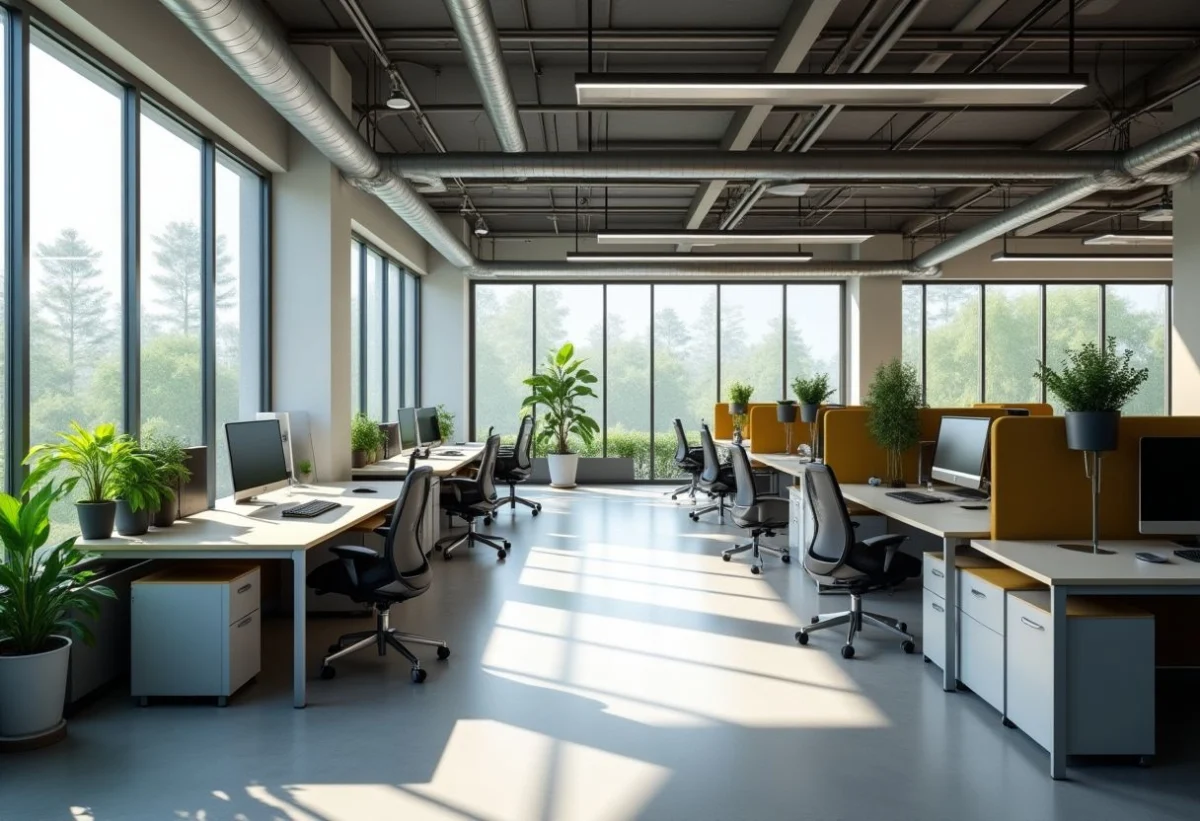
- Green spaces: integrating plants into the work environment contributes to a sense of well-being and reduces stress. It also adds a touch of nature that can make the space more welcoming.
- Mobility and flexibility: encouraging employees to change their workstation can help break monotony and stimulate creativity. Sit-stand workstations can also promote physical health.
- Personalization of spaces: allowing employees to personalize their workspace can enhance their sense of belonging and investment in the office environment.
Designing an open space in a small area is a challenge that can be overcome through ingenious strategies and a bit of creativity. By optimizing the layout, integrating modern technologies, and focusing on employee well-being, it is possible to transform a limited space into a dynamic and innovative work environment. These thoughtful arrangements not only maximize the available space but also promote a work climate conducive to professional growth.