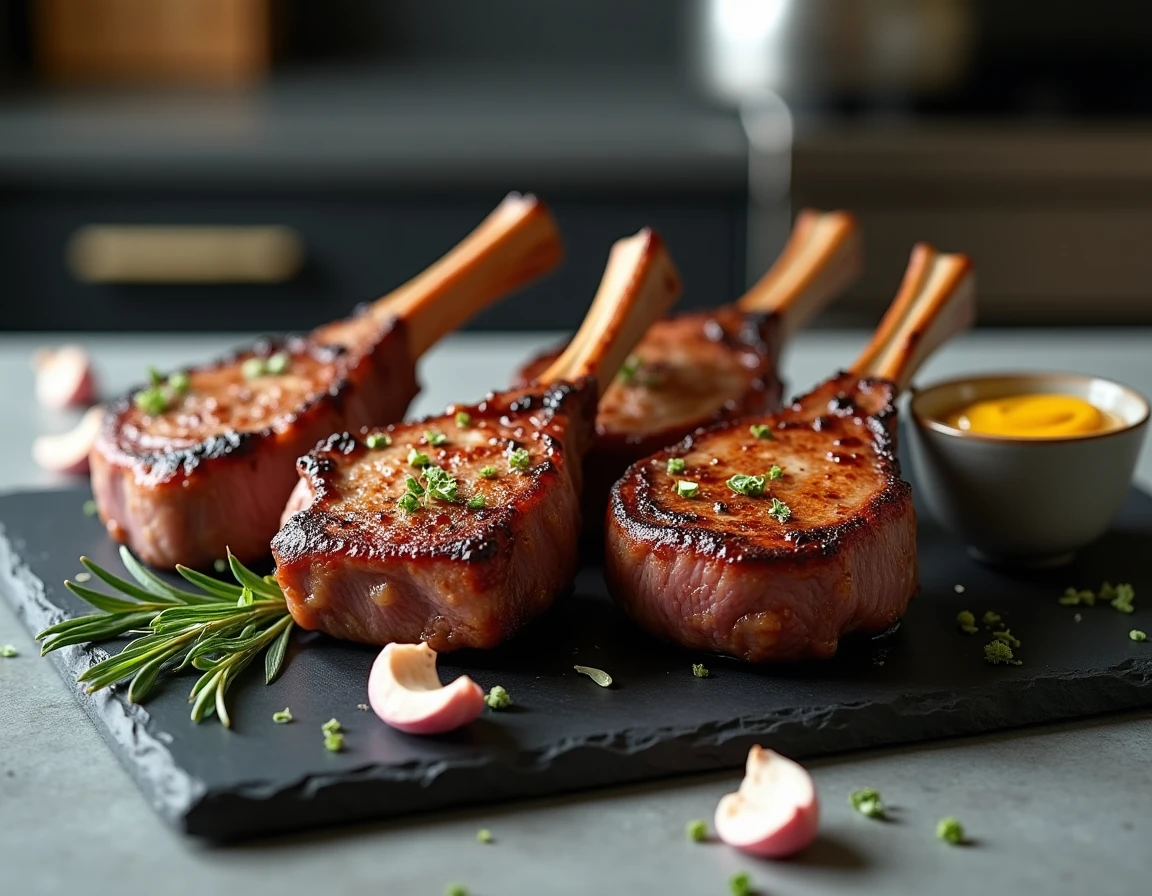
The Cookeo Extra Crisp promises to combine the speed of a multicooker with the crispiness of an air fryer. On paper, lamb chops seem to be the ideal candidate for this dual cooking method. In practice, the results vary greatly depending on the method used, and several technical steps determine the success of the dish.
Maillard Reaction and Lamb Chops: Why the Browning Mode Changes Everything
The Extra Crisp alone is not enough to produce a satisfactory golden crust on a lamb chop. The lid’s heating element heats from above, which limits the direct searing of the surface in contact with the pot.
The decisive phase occurs before the Extra Crisp: the open pot browning mode triggers the Maillard reaction on the meat. This high-temperature searing, directly in the Cookeo pot, caramelizes the surface proteins and creates an initial crispy layer that the Extra Crisp will then solidify.
Preparing a lamb chop in the Cookeo Extra Crisp without this pre-browning step generally results in meat that is cooked through but pale in appearance, almost steamed. The fat from the lamb melts without ever grilling, depriving the dish of its characteristic texture.
Specifically, you need to heat the pot in browning mode, add a drizzle of oil with a high smoke point (sunflower, grapeseed), and then sear each side of the chop until it is nicely colored. It is only after this step that the Extra Crisp comes into play to finish cooking.
Grill Height in the Cookeo Extra Crisp: A Detail That Changes the Cooking of Lamb
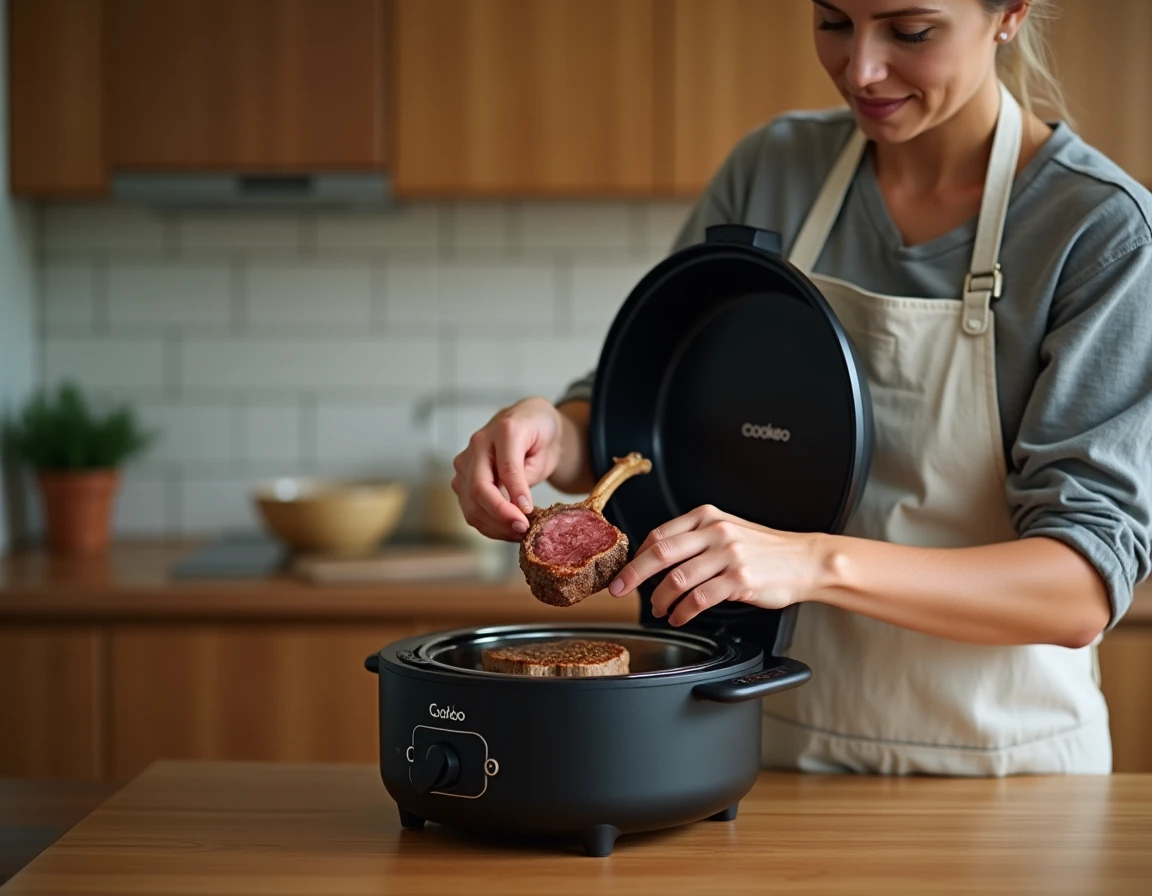
The Extra Crisp accessory works by convection from a heating element located in the lid. The closer the meat is to this heating element, the more effective the browning. Leaving the lamb chops at the bottom of the pot, far from the heat source, slows down the browning and dries out the meat before it can crisp up.
User feedback converges on one point: raising the meat using a compatible grill or basket significantly improves the result. The steaming basket provided with some Cookeo models can serve this purpose, provided the chops are not stacked.
Adjusting the Support According to the Thickness of the Cut
A thin lamb chop (like a rib chop) should be placed directly on the high grill. A thick loin chop requires a compromise: bringing it closer to the heating element increases the risk of a burnt crust before it is cooked through. In this case, an intermediate distance remains preferable, even if it means slightly extending the time under Extra Crisp.
Lamb is a fatty meat. The fat that melts during cooking falls into the pot and can generate smoke if the pot is empty. Adding a bit of water or broth to the pot before activating the Extra Crisp limits this problem and makes cleaning easier.
Cooking Thick Lamb Chops: Divide to Avoid Burning
Loin chops sold in butcher shops or supermarkets often have variable thickness. Dividing the cooking remains the most reliable method for thick cuts: intense searing in browning mode, followed by a high-temperature pass under Extra Crisp, then resting outside the pot.
This resting phase is not a detail. It allows the residual heat to finish cooking the meat through without continuing to grill the surface. The meat relaxes, and the juices redistribute. If the center remains too pink for the cook’s taste, a brief reminder of heat under Extra Crisp can correct this without compromising the crust.
Practical Guidelines for Divided Cooking
- Searing in browning mode: each side until visible coloring, without moving the meat too often to avoid tearing the budding crust
- Extra Crisp phase: high temperature, chops elevated on a grill, regular monitoring as the time varies according to the thickness of each piece
- Resting outside the pot: cover the meat with a sheet of aluminum foil and let it rest for a few minutes before serving
- Optional reminder: a very brief pass under Extra Crisp if the center requires additional cooking
Field feedback varies on the exact timing of each phase, as the thickness of the chops, their initial temperature (straight from the refrigerator or tempered), and the specific model of Cookeo influence the result. Taking the meat out of the refrigerator about twenty minutes before cooking remains a useful reflex to homogenize the temperature rise.
Seasoning and Side Dishes Suitable for Cooking in the Cookeo
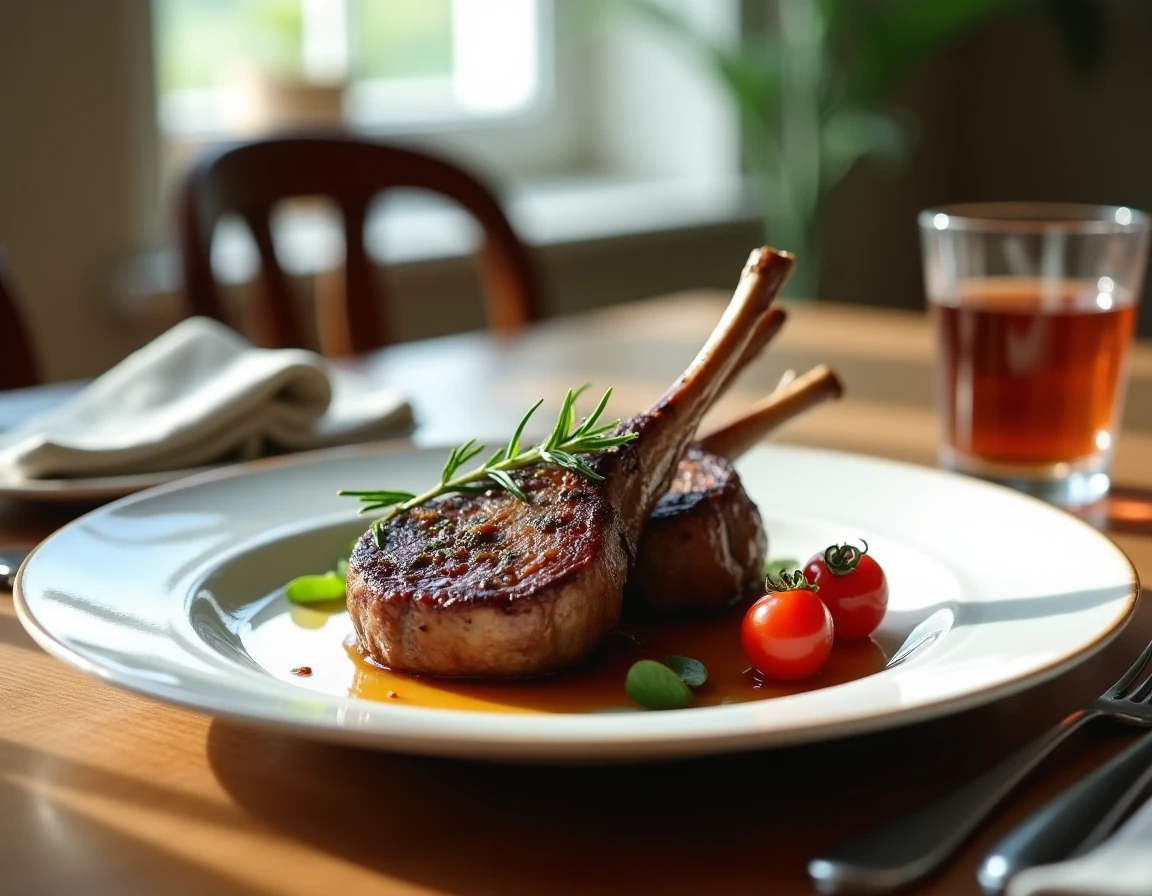
Lamb pairs well with marinades based on citrus, garlic, and Mediterranean herbs. Lemon and rosemary create a classic pairing that works particularly well with Extra Crisp cooking: the acidity of the lemon slightly tenderizes the surface, and the rosemary releases its aromas under the effect of dry heat.
Applying the marinade at least an hour before cooking yields better results than last-minute seasoning. However, sweet marinades (honey, syrup) caramelize very quickly under the Extra Crisp heating element and can burn. It is better to brush them on at the end of cooking, during the heat reminder.
- Side vegetables cooked in the pot during the Extra Crisp phase: diced potatoes, carrots, onions
- Fresh herbs added after cooking to preserve their flavor: parsley, mint, coriander
- Cooking juices collected in the pot can be used as a sauce base, reduced in a saucepan with a splash of veal stock
The juices released by the lamb constitute a natural sauce base that would be a shame to throw away. A few minutes of reduction in a saucepan with aromatics transforms this juice into a complete accompaniment.
Cooking lamb chops in the Cookeo Extra Crisp relies on a precise sequence: browning in an open pot, elevation under the heating element, division for thick cuts. Each step has a distinct technical role, and skipping one of them results in uneven texture or cooking. The multicooker does the work, provided you don’t ask it to do everything in one phase.