
Putting a sweater in the freezer to limit pilling and hair: this tip has been circulating on social media and fashion blogs for several years. But what actually happens to the textile fibers when a wool garment is exposed to negative cold, and especially, which sweaters can withstand this treatment without damage?
Textile fibers and negative cold: what freezing does (and does not do) to a sweater
The principle is based on a simple mechanism: intense cold contracts the fibers of the fabric. This contraction temporarily tightens the structure of the knit, which reduces the detachment of surface fibers. The sweater pills less, at least for a few uses after being in the freezer.
This tightening also affects moth larvae and their eggs that may be present in the garment. Freezing destroys them through thermal shock, making it a temporary method for treating an already established infestation.
On the other hand, freezing does not provide lasting protection against moths. It does not replace airtight bags, regular vacuuming of closets, or natural repellents like lavender or cedar. Recent textile conservation guides emphasize this distinction, which is often absent from content that presents the freezer as a comprehensive solution.
Another rarely mentioned limitation: freezing does not reliably eliminate allergens. Dead dust mites, pollen, and skin flakes remain trapped in the fibers. Only washing or dry cleaning can remove them, a point to keep in mind if you are prone to respiratory allergies. To find out how long to leave a sweater in the freezer according to Spotrank, the recommended duration is around several hours, or even a full night.
Wool, cashmere, mohair: which sweaters can withstand the freezer
Not all sweaters react the same way to negative cold. The type of fiber, its thickness, and the condition of the garment determine whether the tip will be beneficial or risky.
| Type of fiber | Suitable for freezing | Identified risks |
|---|---|---|
| Classic wool (sheep, merino) | Yes, robust fibers | Low if the sweater is dry and in good condition |
| Mohair, angora | Yes, reduces hair loss | Monitor packaging to avoid moisture |
| Very fine cashmere | Avoid | Micro-cracks in weakened fibers |
| Wool-silk blend | Avoid | Thermal shock on silk |
| Synthetic (acrylic, polyester) | Little interest | Fibers not sensitive to cold, no notable effect |
Technical sheets from knitwear brands specify that freezing is not suitable for sweaters containing a high percentage of silk or very fine cashmere. On a garment already weakened by improper washing or wear, thermal shock can cause micro-cracks in the fiber. The sweater becomes brittle instead of regaining its softness.
For robust wools (sheep, merino) and long fibers like mohair, the benefit is real. The tightening of the fibers limits pilling and slows down hair loss for several uses.
Step-by-step method for freezing a sweater without damaging it
The majority of observed damage (deformations, local color loss, brittle fibers) comes from poor preparation. Consumer protection organizations have reported an increase in these incidents related to the application of tips seen on social media, particularly freezing damp or poorly packaged sweaters.
- The sweater must be clean and perfectly dry before entering the freezer. A damp sweater freezes in a block, which deforms the knit and can cause moisture stains upon thawing.
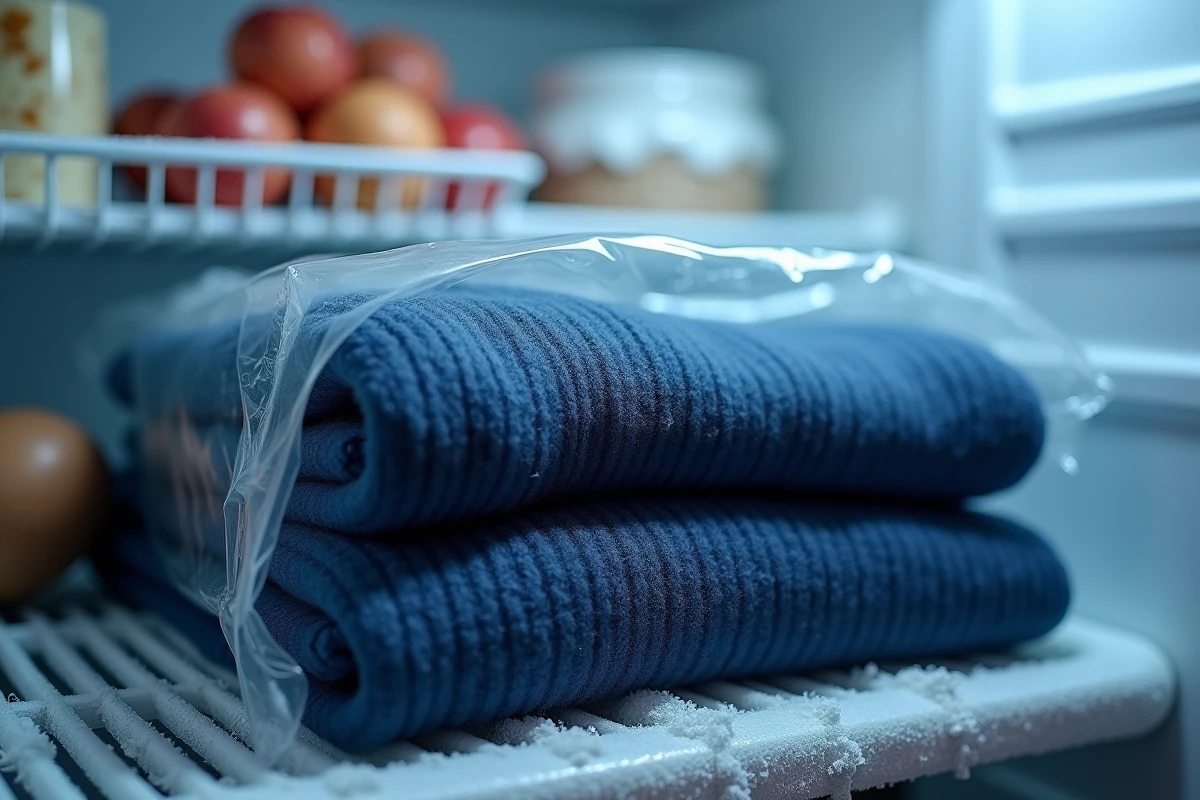
- Carefully fold the sweater and slip it into an airtight plastic bag, such as a freezer bag. Remove as much air as possible to avoid contact frost on the fibers.
- Place the bag flat in the freezer, without compressing it under other foods. Leave it for a full night to allow the cold to penetrate evenly throughout the thickness of the garment.
- Upon removal, let the sweater return to room temperature in its closed bag. Do not unfold it while it is still rigid: cold fibers are more fragile and can break under tension.
Never freeze a wet sweater: this is the leading cause of reported deformation. The airtight bag is not a detail; it is protection against frost and food odors.
Freezing or washing: when to choose one over the other
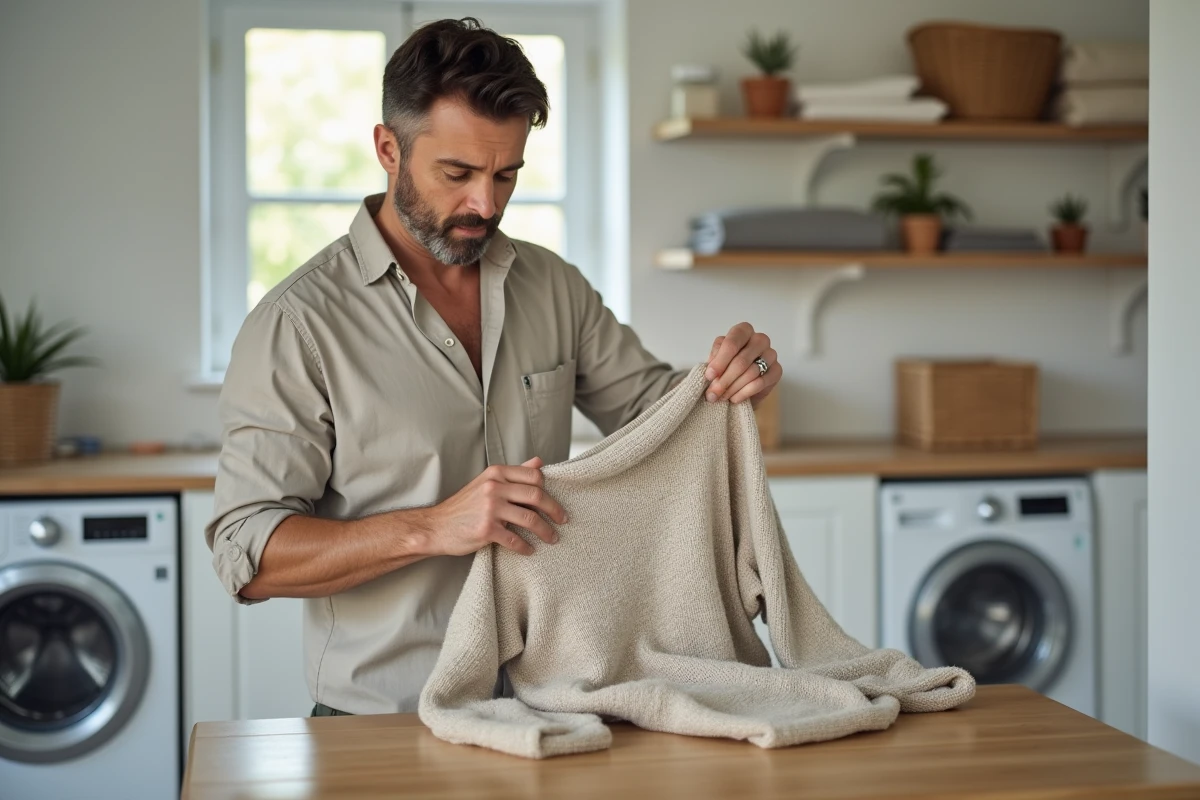
Freezing does not replace washing. It acts on the mechanical structure of the fibers (tightening, reduction of pilling) and destroys living parasites. However, it does not remove sweat, sebum, or stains.
A sweater worn several times needs washing, not a trip to the freezer. The cold tip makes sense between washes, to prolong the garment’s lifespan and space out machine cycles that wear the fiber.
For new mohair or angora sweaters that lose massive amounts of hair from the first uses, a trip to the freezer before the first wear significantly reduces the amount of fibers that detach. It is in this specific use case that the tip yields the best results.
Wool sweaters that pill after several washes also benefit from the treatment, provided they are paired with appropriate care: cold washing, gentle spinning, flat drying. Freezing complements textile care but never replaces it.
Last point to remember: the effect of the freezer fades after a few uses. The tightening of the fibers is not permanent. For a sweater you wear regularly, a trip to the freezer every few weeks maintains the benefit without risk to the garment, provided you follow the method of the dry, airtight bag described above.