A flocking that starts to lift at the edges is a sign that action must be taken quickly. The more the delamination progresses, the more difficult the repair becomes, and the greater the risk of permanently losing the design. Repairing a peeling flocking does not require expensive materials or particular technical skills, but the method used and the type of fabric make all the difference in the outcome.
Heating temperature and type of fabric: the real parameter to master
You may have noticed that some flockings last for years while others come off after just a few washes? The difference often lies in the compatibility between the hot-melt adhesive of the flocking and the fiber of the garment.
Cotton fabric handles heat well. You can apply a hot iron without risking melting the fiber. Polyester, on the other hand, reacts poorly to excessive heat: the fiber distorts, and the flocking may adhere unevenly, or even leave shiny marks on the fabric.
Recent flocking films use low-temperature adhesives activated at around 130 to 140 °C, specifically to treat sensitive fabrics like polyester or synthetic blends. If you are unsure of the exact composition of your garment, check the care label before attempting any repairs. This detail determines the iron’s temperature and the pressing duration.
To delve deeper into common causes of delamination and suitable solutions, you can discover how to repair a peeling flocking on Olivia Style in a dedicated guide on this topic.
Repairing a flocking with an iron without damaging the design
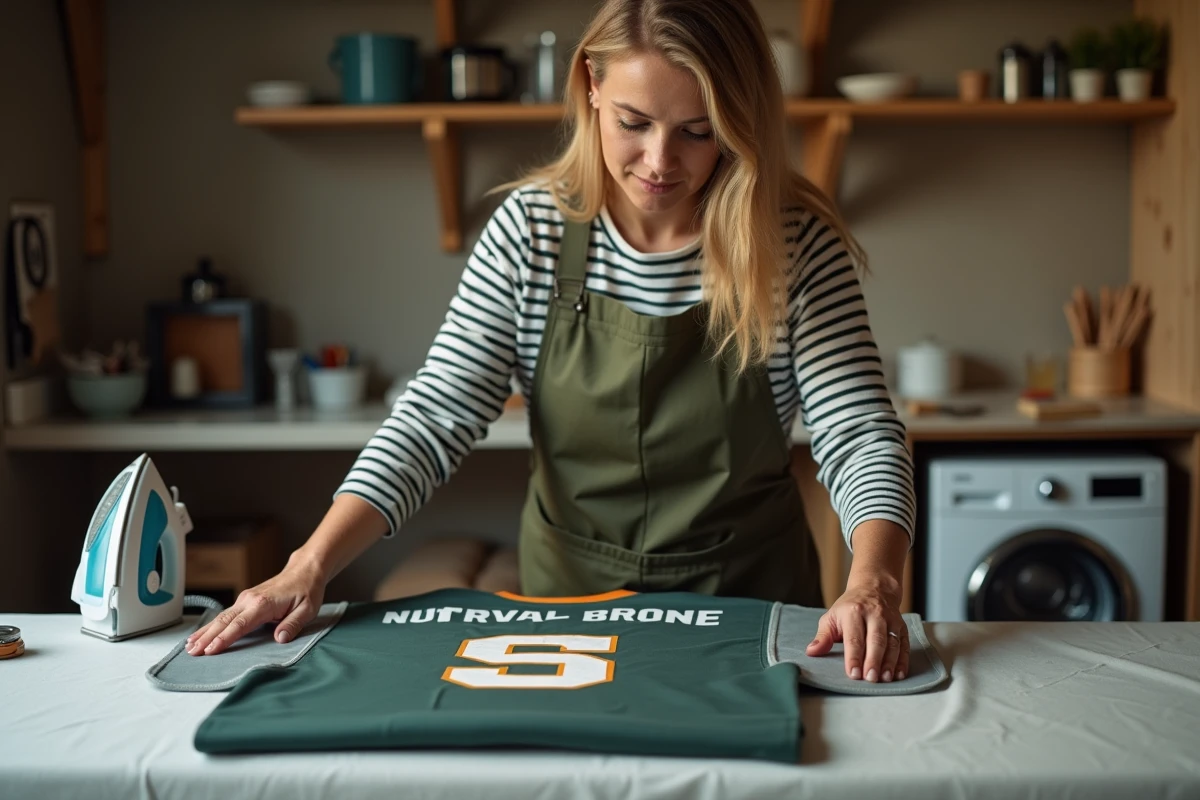
The most accessible method remains the domestic iron. It works well when the delamination is partial, meaning when the edges are lifting but the center of the design is still intact.
Necessary materials and preparation
- An iron set to the appropriate temperature for the fabric (cotton: cotton setting, polyester: synthetic or low setting)
- A sheet of baking paper or Teflon, placed between the iron and the flocking to avoid direct contact with the heat
- High-temperature tape (optional) to hold the lifted areas in place during pressing
- A flat, rigid surface under the garment, not just a simple ironing board cushion that absorbs pressure
The pressing technique that makes the difference
The iron must never glide over the flocking. You press, hold the position for a few seconds, then lift. The classic back-and-forth motion of ironing shifts the design and creates wrinkles in the softened adhesive.
Place the baking paper on the flocking, apply the iron flat and maintain firm pressure for about ten seconds. Lift the iron, check the adhesion by gently lifting a corner of the paper. If the edge still lifts, repeat with a few more seconds.
Let it cool completely before handling the garment. The hot-melt adhesive remains soft as long as it is warm. Pulling or folding the fabric at this moment negates all the repair work.
When the iron is no longer enough: textile glue and limits of reattachment
If the flocking is detached over a large area or if the original adhesive has lost all adhesion capacity, the iron alone will not solve anything. In this case, a heat-activated textile glue applied manually can extend the life of the design.
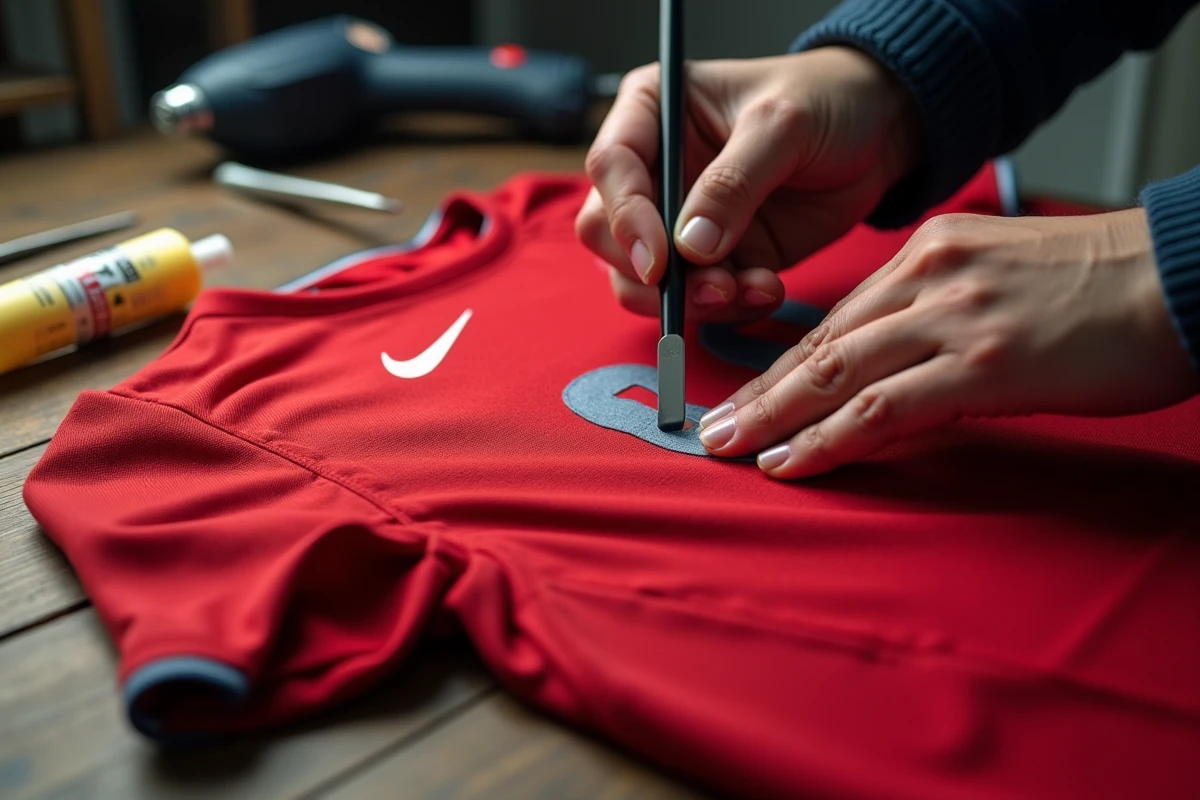
These glues are available in spray or tube form at craft stores. The principle: apply a thin layer on the back of the detached flocking, reposition the design, then activate the glue with heat using the iron and baking paper.
Applying too much glue creates a visible and rigid buildup. A thin, even layer is sufficient. Excess glue that spills onto the fabric around the design leaves shiny rings after heating, particularly noticeable on dark fabrics.
Cases where reattachment is not recommended
Some technical garments (sports jerseys, workwear) receive water-repellent or fire-retardant treatments. Macron Technical Sportswear specifies in its 2024 care sheets that applying direct heat to logos can deactivate water-repellent properties and reduce the lifespan of the fabric.
For this type of fabric, it is better to entrust the repair to a professional marking workshop. Specialized workshops offer complete re-flocking: removal of the old design, cleaning of the substrate, then application of a new flocking with the original templates. This approach avoids distortions and marks left by attempts at domestic reattachment.
Maintenance after repair: preventing the flocking from peeling again
Repairing a flocking without changing your washing habits only postpones the problem for a few weeks. The initial delamination had a cause, and it is often related to maintenance.
- Turn the garment inside out before each wash so that the flocking does not rub against the drum or other fabrics
- Wash at low temperatures, ideally cold or below 30 °C, to preserve the hot-melt adhesive
- Avoid the tumble dryer: prolonged heat and mechanical friction weaken the flocking’s adhesion to the fibers
- If you must iron the garment, always iron it inside out, never directly on the design
A well-reattached and properly maintained flocking can still last a long time. The key remains the temperature: too much heat at the wrong time detaches the design, the right heat at the right time reattaches it. The whole difference lies in this balance.