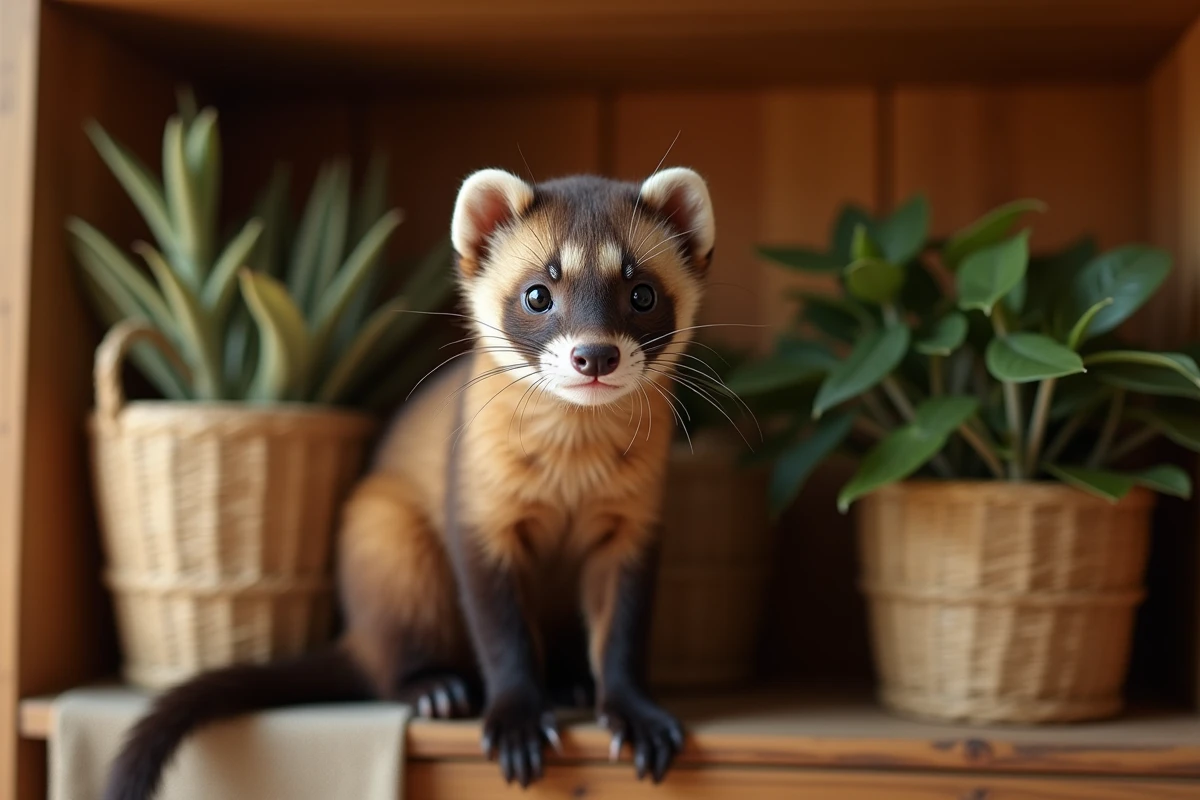
You spotted a small animal with an elongated snout in your attic, or you fell in love with mustelids after watching a viral video. The instinct is often the same: to seek to adopt a domestic ferret. The problem is that the ferret is not a domestic animal. Confusing a ferret with a polecat before adoption can lead to serious disappointments, even legal repercussions.
Keeping a polecat in France: what the Environmental Code says
Before discussing character or diet, one question cuts through the debate. Do you have the right to keep a polecat at home? The possession of a polecat by a private individual is illegal without a wildlife capacity certificate and without prefectural authorization. The Environmental Code (articles L411-1 and L415-3) provides for criminal penalties: fines and confiscation of the animal.
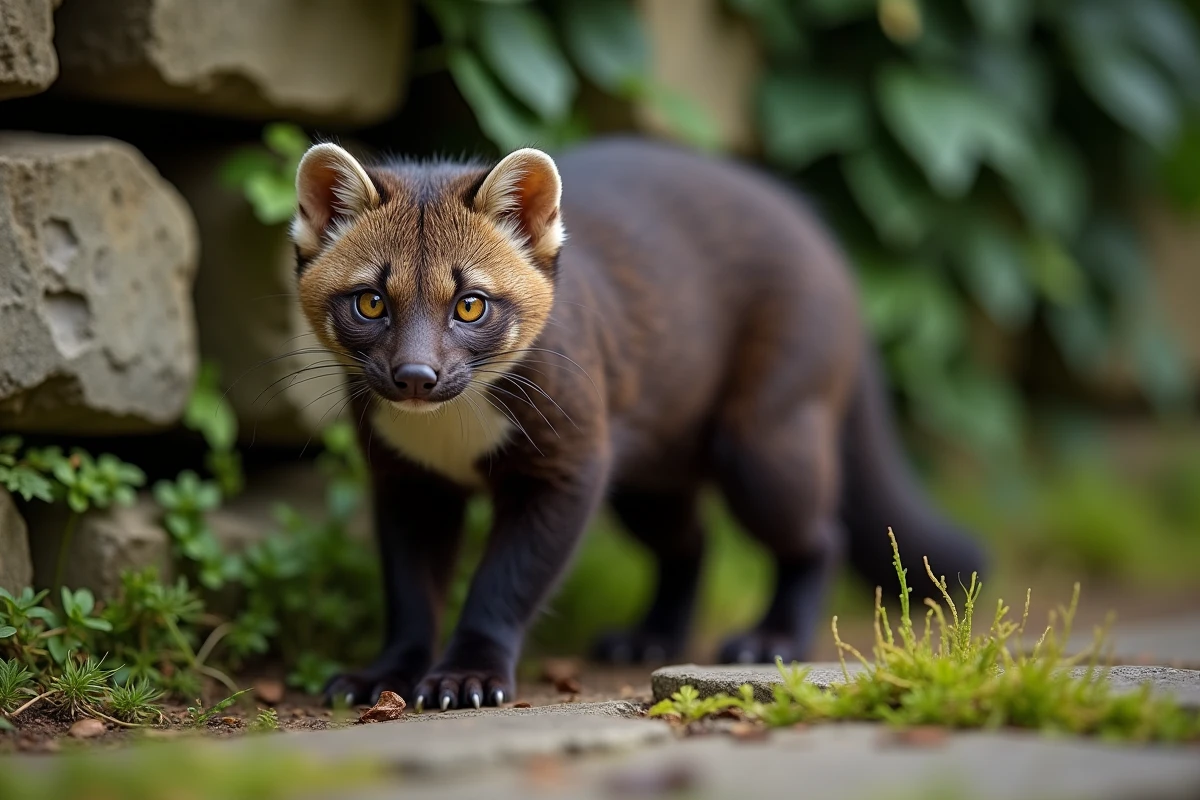
This legal framework is not an administrative detail. It reflects a biological reality. The polecat (Martes foina) remains a wild animal, with predatory behaviors and territorial marking that are impossible to manage sustainably indoors.
Wildlife rehabilitation centers, in France as in Germany (recommendations from the Deutsche Wildtier Stiftung) or the UK (Wildlife Aid Foundation), emphasize one point: even a juvenile polecat found orphaned should be directed towards reintroduction into the wild, not towards socialization as a pet. Rather than attempting the impossible, it is better to turn to the ferret and adopting a domestic ferret is never the right option when faced with this already tamed mustelid.
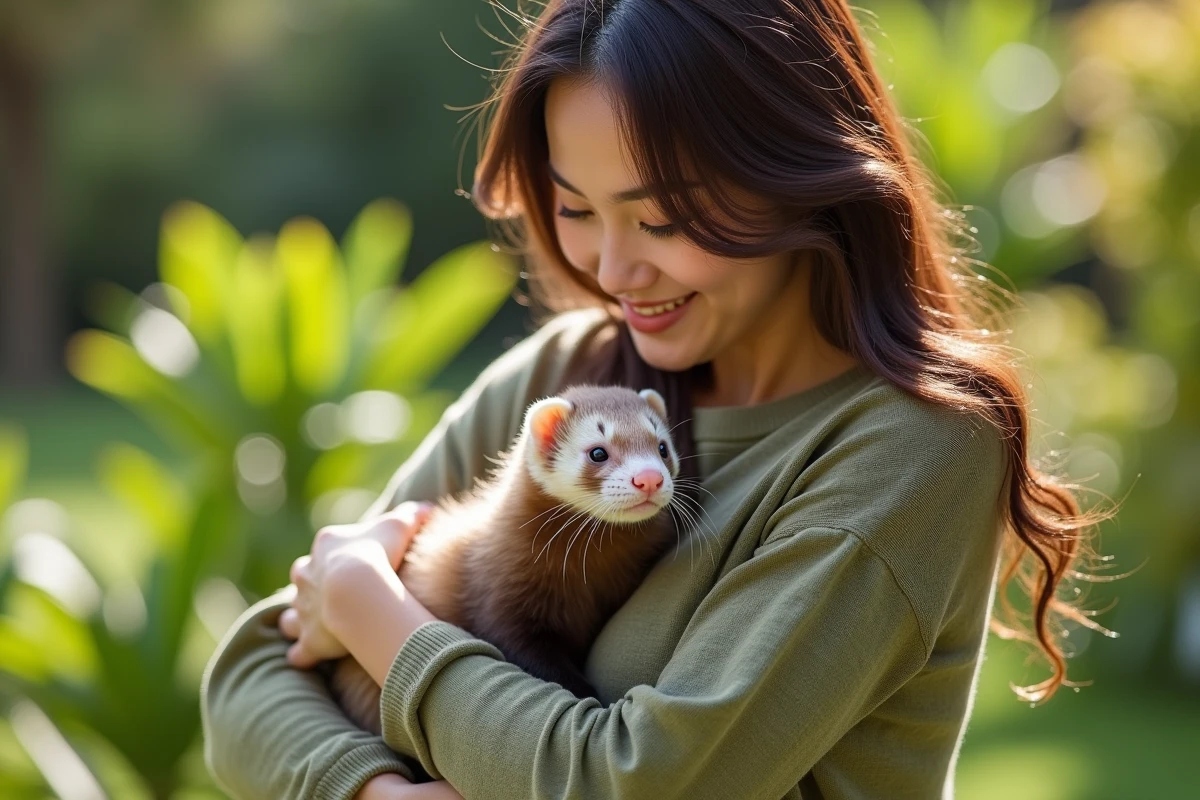
Polecat and ferret: the concrete behavioral differences
Why do we often confuse these two animals? The ferret and the polecat belong to the mustelid family and share an elongated silhouette. The resemblance stops there.
Life rhythm and human interaction
The polecat is a nearly nocturnal animal. It hunts small mammals, birds, and feeds on fruits and eggs. Its activity is concentrated at night, making it incompatible with a shared apartment lifestyle.
The ferret, on the other hand, has been domesticated for centuries. It sleeps between 14 and 18 hours a day and adjusts its waking phases to its owner’s rhythm. The ferret actively seeks human contact, plays, responds to its name, and accepts a harness for outings.
Marking and odor
Both animals have pronounced-smelling anal glands. In ferrets, sterilization significantly reduces body odors. In polecats, territorial marking persists regardless of the conditions of captivity, making indoor cohabitation difficult to bear.
Budget and veterinary care for the domestic ferret
Adopting a ferret means committing to a lifespan of several years. The budget is not limited to the purchase of the animal.
- Sterilization is highly recommended, especially for females: prolonged heats without mating can cause potentially fatal aplastic anemia.
- Vaccinations against distemper and rabies are necessary. Few general veterinarians are skilled in caring for exotic pets: be prepared to find a specialized veterinarian, often more expensive.
- Diet consists of high-protein animal kibble or a home-prepared diet suitable for strict carnivores. High-end cat kibble is sometimes used, but a food formulated for ferrets is preferable.
- The cage or dedicated room requires specific arrangements: hammocks, tunnels, litter, fixed bowls. A ferret needs several hours of daily out-of-cage time to remain balanced.
Ferret abandonment: a growing problem to anticipate
Exotic pet veterinarians have reported a sharp increase in ferret abandonments since the late 2010s. The typical scenario: an adorable ferret kit adopted on a whim, then an adult animal whose needs exceed what the owner had anticipated.
The odor, uncorrected play bites, and veterinary costs are the top three reasons for abandonment. A poorly socialized ferret can bite hard. Socialization work begins in the first weeks and requires consistency.
Before buying a ferret kit from a pet store, inquire with dedicated protection associations. Adopting an adult ferret from a shelter allows you to know its character, health status, and reduces the risk of unpleasant surprises. These associations often support new adopters with personalized advice.
Ferret in an apartment: minimum conditions for a balanced animal
The ferret lives very well in an apartment, provided some rules are respected. The cage serves as a place of rest and safety when you are absent, not as a permanent living space.
Plan for at least three to four hours of supervised freedom each day. A ferret confined permanently develops behavioral issues: self-mutilation, aggression, apathy.
The room for outings must be secured. Ferrets can squeeze into spaces a few centimeters wide, chew on electrical cables, and swallow pieces of foam or rubber. Intestinal blockages related to the ingestion of foreign objects are among the most common veterinary emergencies in this species.
The ferret often cohabits well with cats. With dogs, compatibility depends on the breed and individual temperament. Cohabitation with rabbits or rodents is not recommended: the ferret remains a carnivore whose hunting instinct can awaken at any moment.
If you are hesitating between a ferret and another pet, the decisive criterion remains your daily availability. A cat requires less structured interaction. A ferret, on the other hand, demands active playtime, constant vigilance during outings, and specialized veterinary follow-up. It is an affectionate and playful companion, but it does not forgive improvisation.