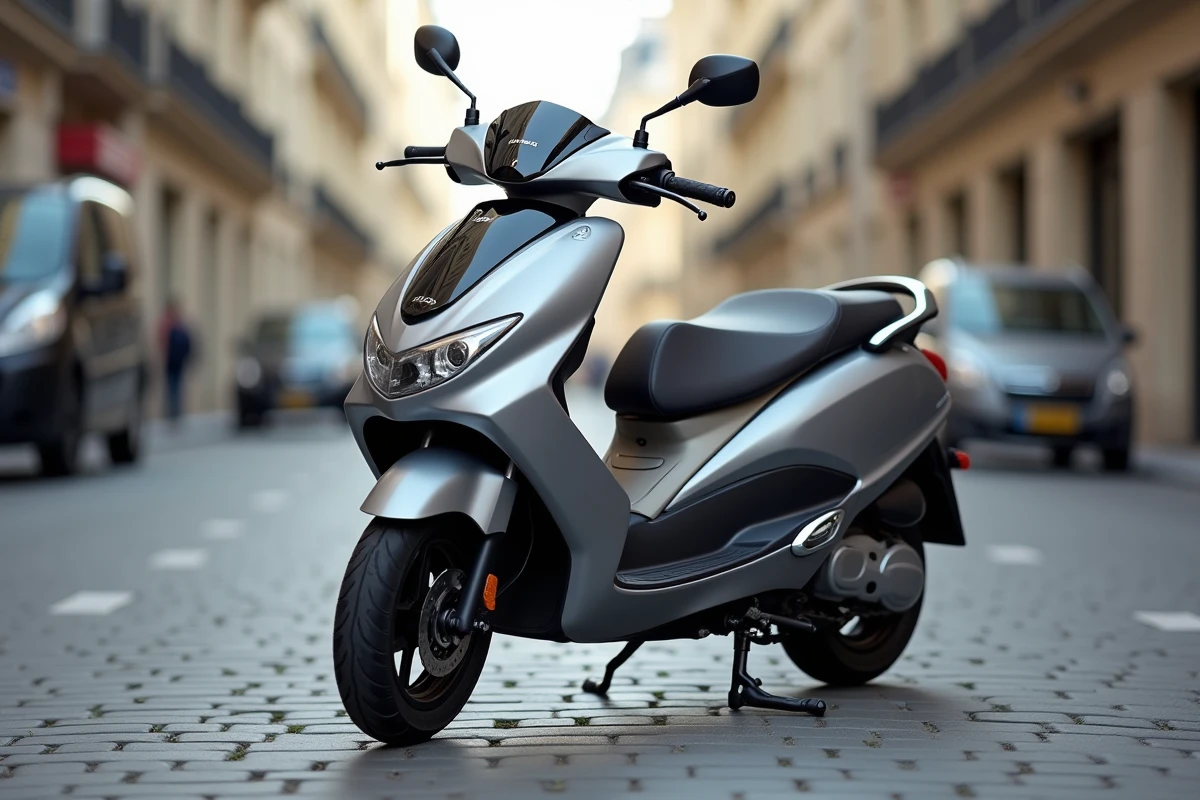
The 400 cm³ scooter segment occupies a special place in the French two-wheeler market. Sandwiched between the sometimes limited 300 cm³ models for fast roads and the heavier, more expensive 500 cm³ scooters, this engine size attracts A2 license holders looking for a compromise between agility in the city and comfort on peri-urban journeys.
400 cm³ Scooter and A2 License: Why This Engine Size Is Gaining Ground
2024 specialized guides present the 300-400 cm³ range as the best compromise between power, weight, and range for mixed use. The reasoning is based on a few simple observations: a 125 cm³ shows its limits as soon as you take it on a fast road loaded, while a 500 cm³ or larger increases the purchase, insurance, and maintenance costs.
The 400 cm³ sits perfectly between the two, accessible with an A2 license (subject to restrictions depending on the models) and sufficiently torquey to carry a passenger and a top case without strain. For riders who travel daily on peripheral routes or highway sections, this power margin significantly enhances safety during overtaking and merging.
Before choosing a model, consulting the 400 scooter comparison on Gazette Debout allows for a comparison of the technical specifications of current references in the segment.
Yamaha XMAX 400 vs. Piaggio Beverly 400: Two Riding Philosophies
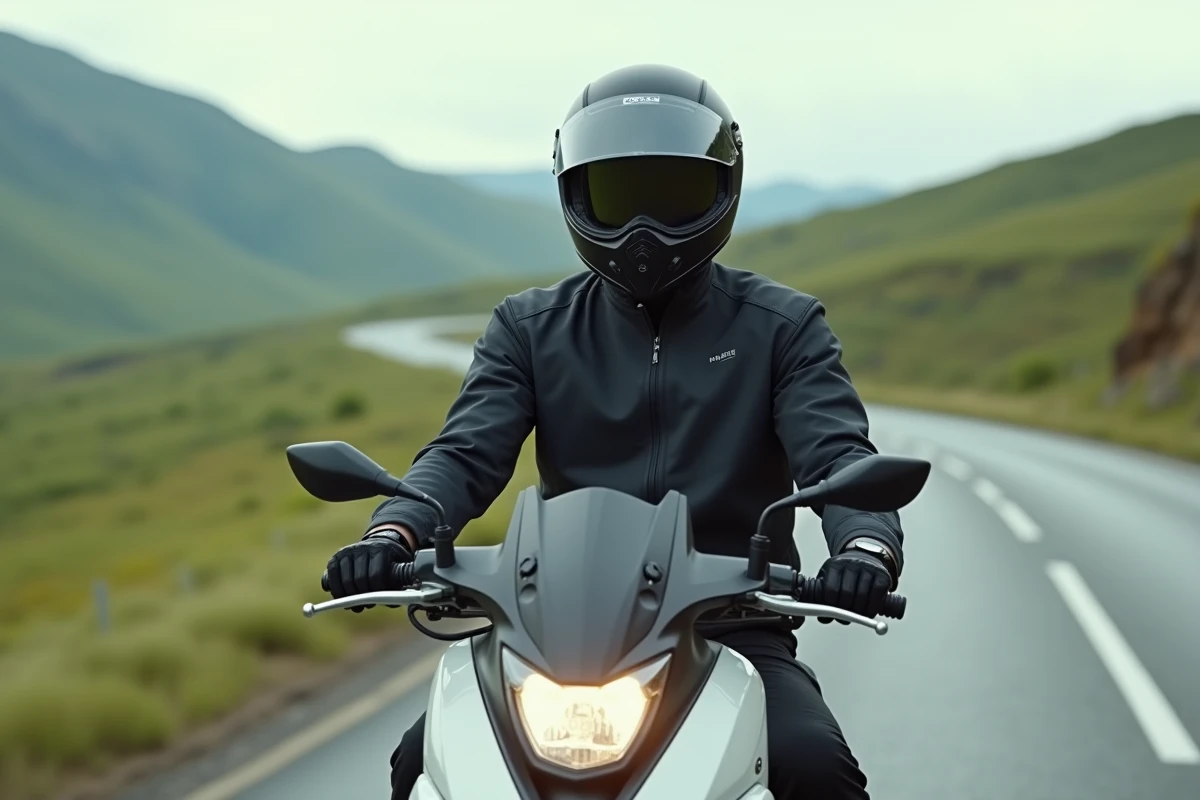
Talking about a 400 cm³ scooter without contrasting these two models would ignore the reality of the market. The Yamaha XMAX 400 and the Piaggio Beverly 400 dominate discussions among buyers, and their differing approaches mean that the choice is not just a matter of price.
XMAX 400: Road Comfort as a Priority
Yamaha has confirmed the arrival of a new version of the XMAX 400 with design and equipment updates aimed at better distinguishing it from the XMAX 300. The current model features a wide seat, a generous windshield, and a relaxed riding position that favors long journeys. The single-cylinder engine delivers its power in a linear manner, without jolts, which reassures riders coming from the 125 cm³.
However, weight remains a factor to consider in urban maneuvers. An XMAX 400 is noticeably heavier than an XMAX 300, and the difference is felt in tight U-turns or on sloped surfaces.
Beverly 400: Urban Agility and Large Wheels
The Piaggio Beverly 400 features large diameter wheels that improve stability on degraded surfaces. This architecture brings it closer to motorcycle behavior than to a classic small-wheeled scooter. In the city, the perceived gain in maneuverability compared to the XMAX is real, especially in quick lane changes.
The compromise comes at the cost of under-seat storage, which is generally smaller than that of Yamaha. For daily use with a full-face helmet to store, this practical detail can weigh heavily in the decision.
Two-Wheeler Technical Control: What the Initial Reports Reveal for 400 cm³
The official 2024-2025 technical control statistics show that maxi-scooters over 50 cm³ have a re-inspection rate of about 9.4%, compared to nearly 20% for mopeds and small scooters. This gap suggests a generally more serious level of maintenance for intermediate and larger displacement vehicles.
Several factors explain this difference. Owners of 400 cm³ scooters invest more at purchase and tend to follow manufacturer recommendations. The dealer networks of Yamaha, Piaggio, BMW, or Kymco offer structured maintenance packages, whereas a small scooter is often serviced more randomly.
For a used buyer, this finding is good news, but it does not exempt one from a thorough inspection. The points to check before purchase remain numerous:
- The condition of the brake pads and discs, the first wear items on an urban scooter braked several times per trip
- The transmission belt, whose replacement represents a significant cost if neglected beyond the recommended intervals
- The condition of the rear suspension, often stressed by the weight of the passenger and luggage on a 400 cm³ used in tandem
- The maintenance booklet stamped by an official network, which remains the best indicator of the seriousness of the previous owner
Real Budget of a 400 cm³ Scooter: Beyond the Catalog Price
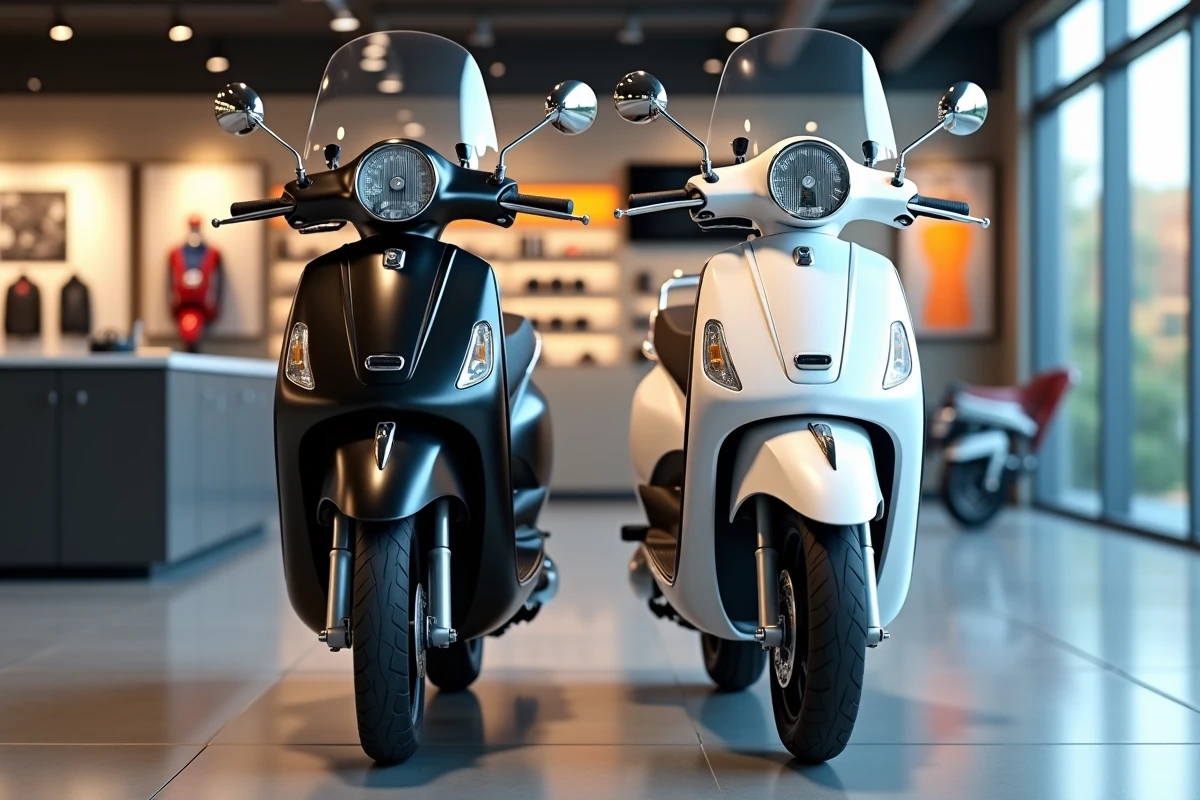
The purchase price represents only part of the actual cost of ownership. For a 400 cm³ scooter, comprehensive insurance costs significantly more than for a 125, due to the higher power and value of the vehicle. Riders who have recently obtained their A2 license also face a young driver surcharge during the first few years.
Fuel consumption remains moderate compared to a maxi-scooter of 500 or 600 cm³, but exceeds that of a 300 cm³ on the same routes. Routine maintenance (oil changes, filters, spark plugs) follows a schedule comparable to other displacements, with slightly more expensive parts than on a 125 or 300.
The most variable expense concerns tires. Models with large wheels like the Beverly 400 use less common sizes, which limits choice and can increase replacement costs. Models with smaller wheels benefit from a more competitive tire market.
Alternatives to Gasoline: Where Do Equivalent 400 cm³ Electric Scooters Stand?
Some manufacturers offer electric scooters whose performance is close to that of a thermal 400 cm³, such as the BMW CE 04. Field feedback varies on this point: while instant acceleration is impressive, the actual range remains below what a thermal tank offers on mixed journeys. Purchase aids exist in certain metropolitan areas (Paris, Lyon, Marseille), which can reduce the initial price gap.
The fast charging network suitable for two-wheelers remains underdeveloped outside major urban areas. For a rider whose daily commute exceeds sixty kilometers round trip, the thermal 400 cm³ retains a clear practical advantage in 2024. The evolution of batteries and infrastructure could change this balance in the coming years, but the available data does not allow for a precise timeline.